



Here is something the Lean Six Sigma training industry does not like to talk about: most LSS projects do not deliver the results they promised. Not because the methodology is flawed. Because of five specific, predictable mistakes that happen before the first data point is even collected. We have seen all five — repeatedly. This is what they look like and how to avoid them.
Key Takeaways
- The methodology is almost never the problem — execution and context are
- The most dangerous failure happens in the Define phase — before the real work even begins
- Indian organisations have specific cultural dynamics that global LSS frameworks do not account for — and that silence kills projects
- Teams that succeed share three behaviours that have nothing to do with statistical knowledge
- A certificate without project experience does not prepare you for any of this — which is exactly why project mentorship matters more than exam preparation
First — Why This Conversation Matters
There is a number that gets thrown around in process improvement circles: 60 to 70 percent of LSS initiatives fail to deliver their intended results. Some studies put it higher. The exact figure is debated but the direction is not — the majority of projects underdeliver.
This is not a reason to abandon Lean Six Sigma. It is a reason to understand why failure happens and to go in with your eyes open. The professionals and teams who deliver results consistently are not smarter or more experienced than those who do not. They have simply avoided the specific mistakes that sink most projects.
What follows is not theory. It is a pattern we have seen play out across Indian manufacturing plants, IT delivery centres, pharma facilities, and banking operations — sometimes in different words, always in the same sequence.
Failure Pattern 1 — The Problem Statement That Is Actually a Solution in Disguise
This is the most common and most costly mistake in Indian LSS projects. A manager identifies a problem, decides on the fix before any data is collected, and then frames the project around implementing that fix rather than investigating the actual problem.
It sounds like this: "Project: Implement new inventory software to reduce stockouts." That is not a problem statement. That is a predetermined solution. The actual problem statement should be: "Stockout frequency is 23% above target, costing Rs.12L per month in emergency procurement." The solution might be software. Or it might be something completely different that data reveals — a supplier lead time issue, a forecasting gap, an approval bottleneck. You do not know until you measure.
Why This Happens in India Specifically
In many Indian organisations there is significant hierarchy pressure to arrive at meetings with solutions rather than questions. Admitting you do not know the root cause yet can feel like admitting weakness. So teams skip the investigation and jump to implementation. The project gets done, the solution gets deployed, and six months later the original problem is still there — sometimes worse.
What Successful Teams Do Instead
They spend more time in Define than feels comfortable. They challenge every problem statement with one question: does this describe what is happening or what we think should happen? If the statement contains a verb like "implement", "install", or "train" — it is a solution, not a problem. They rewrite it until it describes a gap between current performance and required performance, expressed in measurable terms.
Failure Pattern 2 — Data That Looks Good But Means Nothing
The Measure phase is where Indian LSS projects most often go through the motions without doing the actual work. Teams collect data — sometimes large amounts of it — without first verifying that the data is reliable, relevant, or actually measuring what the problem requires.
A pharma quality team in Hyderabad once spent six weeks collecting batch rejection data only to discover in week seven that two of their three quality inspectors were using different criteria to classify a defect. The data from those six weeks was meaningless. The project was effectively starting over.
This is exactly what Measurement System Analysis — MSA — exists to prevent. But in a rush to show progress, teams skip it. The result is confident analysis built on unreliable foundations, which leads to solutions targeting the wrong causes.
The Uncomfortable Truth About Indian Data Quality
In many Indian manufacturing and service organisations, historical data is either incomplete, recorded inconsistently, or shaped by the fact that people knew it was being recorded. A machine operator who knows the shift supervisor checks rejection counts at 6pm may record borderline units differently in the afternoon. This is human nature, not dishonesty — but it makes baseline data deeply unreliable unless you account for it.
What Successful Teams Do Instead
They treat data collection as an investigation, not a formality. Before collecting anything they document exactly what they are measuring, how, by whom, using what criteria, and what would make a measurement invalid. They run a small MSA before committing to a data collection plan. Two extra days here saves two months of wasted analysis downstream.
Failure Pattern 3 — Root Cause Analysis That Stops One Layer Too Early
The 5 Whys is one of the most taught and most misused tools in Lean Six Sigma. Teams ask why once or twice, reach a plausible-sounding answer, and stop. The root cause they identify is actually a symptom of a deeper system issue — but it sounds reasonable enough that nobody pushes further.
Machine breaks down. Why? Maintenance was not done. Why? The maintenance schedule was missed. That is where many teams stop. Solution: remind people to follow the schedule. Six months later the machine breaks down again, for the same reason. Because the actual root cause was never reached — the maintenance schedule was not integrated into the shift handover process, nobody owned it formally, and the system had no way of flagging when it was overdue.
The surface cause and the root cause can look similar but they lead to completely different solutions. Surface cause solutions fix the symptom temporarily. Root cause solutions fix the system permanently.
What Successful Teams Do Instead
They have one test for whether they have reached the root cause: if they fix this specific thing, is it physically impossible for this problem to occur again? If the answer is "probably not" rather than "yes" — they have not gone deep enough. They keep asking why until the answer points to a process design flaw, a system gap, or an ownership vacuum — not just a human behaviour they are hoping will change.
Failure Pattern 4 — Solutions That Work in the Pilot and Die in the Rollout
A project team runs a beautiful pilot on one shift, one line, or one department. The numbers are excellent. Leadership approves full rollout. Six months into the rollout the results have halved and nobody can explain why.
This happens because the pilot succeeded partly due to the project team's presence — their attention, their daily monitoring, their ability to catch deviations immediately. When they moved on, the process had no mechanism to maintain itself. The improvement was dependent on people, not embedded in the system.
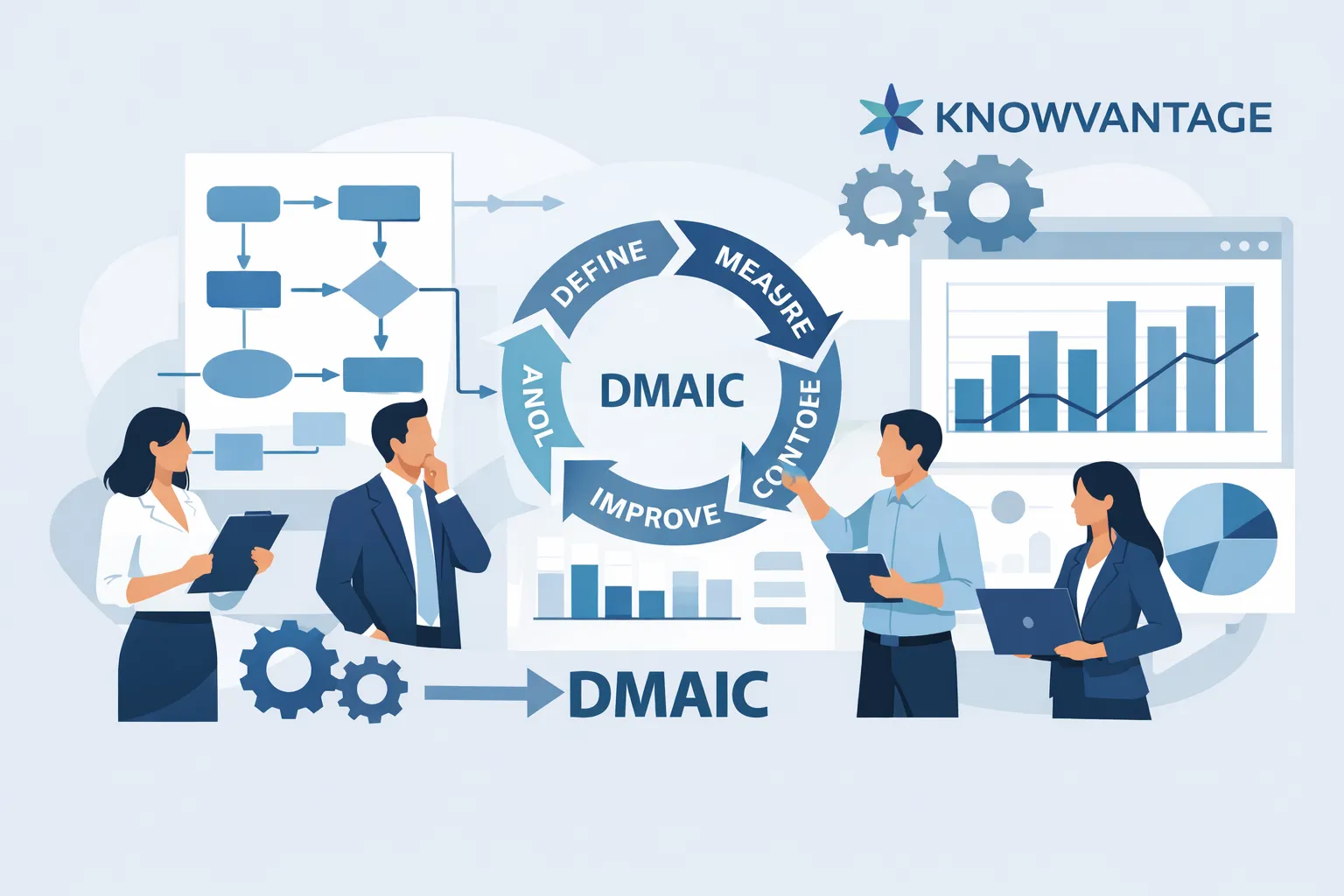
This is why the Control phase exists and why it is the most skipped phase in Indian LSS projects. Teams celebrate the pilot results, write a final report, and move on before the improvement is genuinely self-sustaining.
The Indian Organisational Pressure That Makes This Worse
In India, the professional incentive is heavily weighted toward starting new initiatives rather than sustaining existing ones. A new project looks like initiative. Monitoring an old one looks like maintenance. So certified professionals move from project to project, and the improvements they delivered quietly degrade behind them. This is a culture problem as much as a methodology problem — and it requires conscious effort to push back against.
What Successful Teams Do Instead
They do not consider a project complete until three things exist: a control chart being actively monitored by someone who is not on the project team, a written response plan for when the process drifts, and a 90-day post-implementation review already scheduled. If any of these three are missing at handover the project is not finished — regardless of what the pilot results showed.
Failure Pattern 5 — The Certified Professional With No Organisational Cover
This is the failure nobody talks about in training programs because it has nothing to do with methodology. A professional gets certified, returns to their organisation with genuine skills and enthusiasm, identifies a real improvement opportunity — and then spends six months trying to get data access, stakeholder buy-in, and management time that never materialises.
The problem is not their capability. The problem is that they are trying to run a cross-functional DMAIC project as an individual contributor without formal sponsorship. In India, where hierarchy and formal authority carry enormous weight, a Green Belt without an engaged sponsor above them is like trying to build a house without permission to enter the land.
This is the most demoralising failure of all because the professional did everything right — studied hard, passed the exam, identified a real problem — and still got nowhere. The failure was structural, not personal.
What Successful Teams Do Instead
They secure a named sponsor before the project charter is written — not after. The sponsor is a manager or director with the authority to unlock data, clear roadblocks, and attend the Define phase tollgate. Without that name on the charter the project should not begin. This is not bureaucracy — it is the single most reliable predictor of whether a project will cross the finish line.
The Three Things Every Successful LSS Project in India Has in Common
After looking at both successful and failed projects across industries, three factors consistently separate the ones that deliver from the ones that stall.
1. A Problem That Someone Senior Genuinely Wants Solved
Not a problem that looks good on a project list. Not a problem that was assigned to fill a training requirement. A problem that a sponsor wakes up thinking about because it is costing the business real money or real customers right now. When the problem matters to leadership the doors open. When it does not, every step is a battle.
2. A Belt Practitioner Who Has Done This Before — Even Once
There is a specific kind of judgment that only comes from having run a project to completion at least once — knowing when data is telling you something real versus when it is statistical noise, knowing when to push deeper in the Analyze phase versus when you have enough, knowing how to read a room when stakeholders are resisting the findings. This judgment cannot be taught in a classroom. It develops through doing. Which is exactly why the first project matters so much and why doing it with experienced mentorship compresses the learning curve significantly.
3. A Control Mechanism That Does Not Depend on the Project Team
Every project that sustains its results has handed ownership of the improved process to someone who was not on the project team, given that person a control chart and a response plan, and checked back 90 days later. Every project that drifted back to its old performance level had none of these three things in place at handover.
What This Means for Your Certification Decision
If you are considering Lean Six Sigma certification, reading this should make one thing clear: the exam is the smallest part of what you need to learn. The methodology in the textbook is clean and logical. The actual project is messier, more political, more dependent on judgment calls that no multiple-choice question can prepare you for.
This is why Knowvantage is built the way it is — cohorts of experienced professionals, real project work during training, mentorship from practitioners who have navigated the exact failure patterns described above. Not because it makes for better marketing but because every one of these failures is avoidable with the right preparation, and we have seen what happens to candidates who certify without it.
The goal is not a certificate on your wall. The goal is a project story that demonstrates you can walk into a room with a real problem and walk out having solved it. That is what the market pays for.
Frequently Asked Questions
Planning Your First LSS Project?
Book a free consultation. We will review your project idea against the five failure patterns above and tell you honestly whether the conditions for success are in place — and what needs to change if they are not.
Book a Free ConsultationDownload Free Belt Comparison Guide


Reply to Comment